
The most important property of a compressed air hose is its ability to withstand pressure (pressure rating) while maintaining durability and safety. Here’s why:
Pressure Resistance
The hose must handle the maximum working pressure of the compressed air system without bursting or leaking.
Too low a rating → Risk of rupture, causing dangerous failures or tool malfunctions.
Industrial hoses typically range from 150 PSI to 300+ PSI. But some heavy-duty hoses go up to 500 PSI.
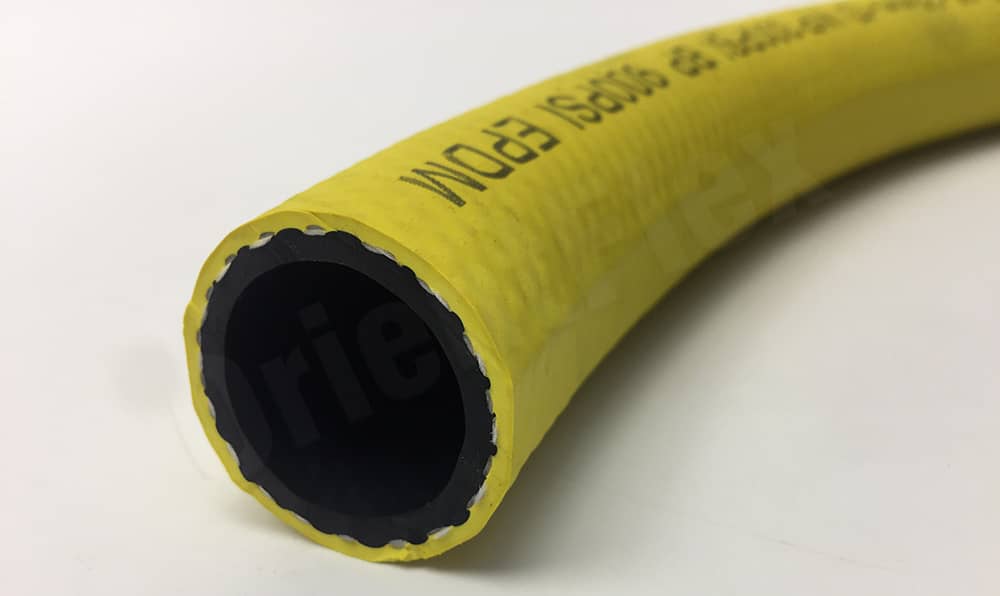
Burst Pressure Safety Margin
A good air hose should have a burst pressure at least 3-4 times its working pressure for safety.
Material Durability
Rubber hoses-Best for flexibility, abrasion resistance and durability.
PVC/Nylon hoses-Lightweight but less flexible in cold weather.
Hybrid/Polyurethane hoses-Balance flexibility and kink resistance.
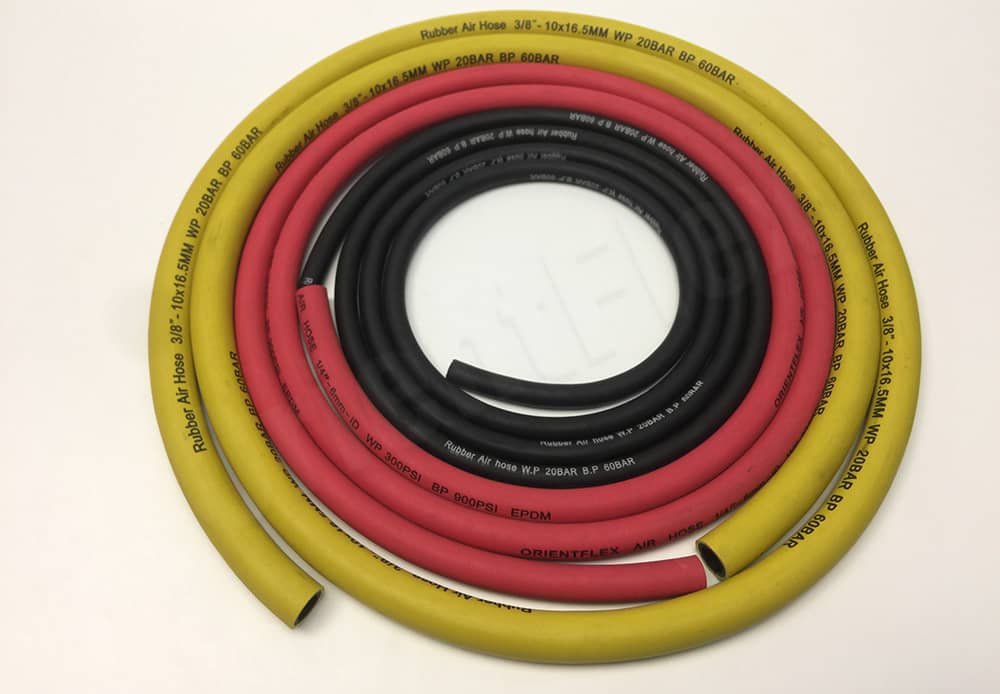
Flexibility & Kink Resistance
A stiff hose can be hard to maneuver, while a too-soft hose may kink, blocking airflow.
Temperature Resistance
Should perform in extreme cold or heat. For example, -40℉ to +200℉ for industrial rubber hoses.
Abrasion & Chemical Resistance
Must resist oil, grease, and wear in harsh environments. (e.g., workshops, construction sites).