
Prioritize Industrial-Grade Materials for Durability
First, pick materials that handle industrial stress
Rubber industrial air hoses
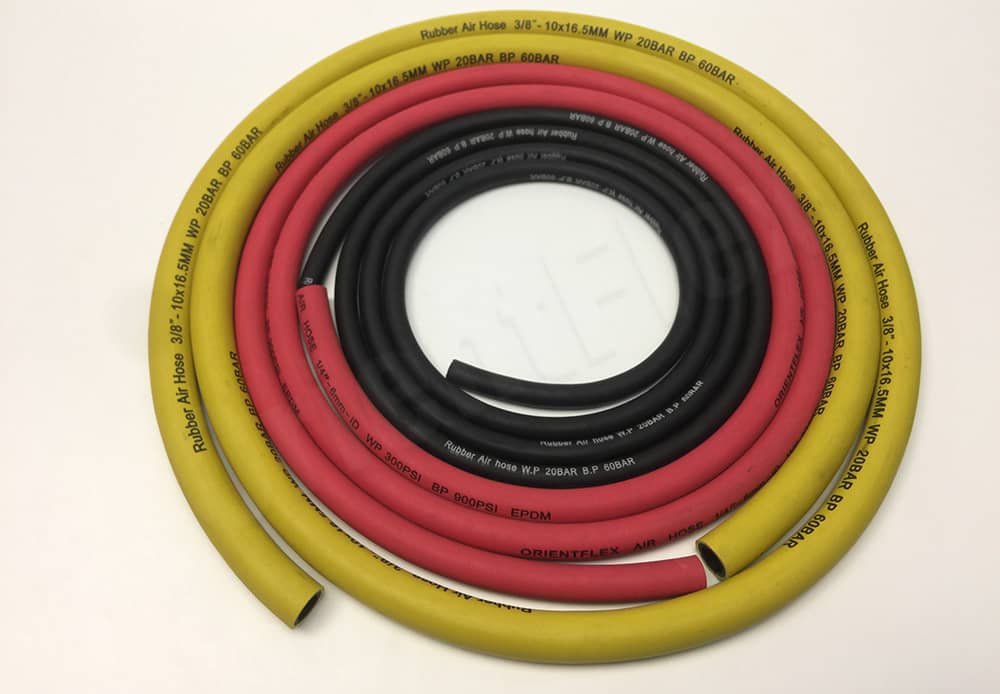
Best for heavy industrial tasks. They resist oil, chemicals, and constant abrasion from machinery or concrete. They also tolerate extreme temps, so they work in factories with hot/cold zones.
Reinforced PVC industrial air hoses
Good for light industrial use. Look for ones with polyester braids as they add strength without extra weight. Avoid plain PVC because it cracks under frequent industrial use.
Polyurethane industrial air hoses
Ideal for mobile industrial tasks like handheld air tools. They’re lightweight but tough, resisting UV rays and minor impacts. Thus it is perfect for outdoor industrial sites.
Match Industrial Air Hose Specs to Your Equipment
Next, check specs to avoid performance issues.
First, confirm pressure rating. Industrial air compressors often run at 150–200 PSI, so choose an industrial air hose rated 200+ PSI. Underrated hoses burst easily, risking downtime.
Second, select length and diameter for industrial spaces. For large factories, 50–100 feet hoses cover more area—just pair with a pressure booster if needed. Diameter matters too: 3/4 inch for heavy tools like air hammers. While 1/2 inch for standard industrial tools like impact wrenches.
Check Industrial-Specific Features for Safety & Efficiency
Finally, focus on features that suit industrial use.
Heavy-duty reinforcement
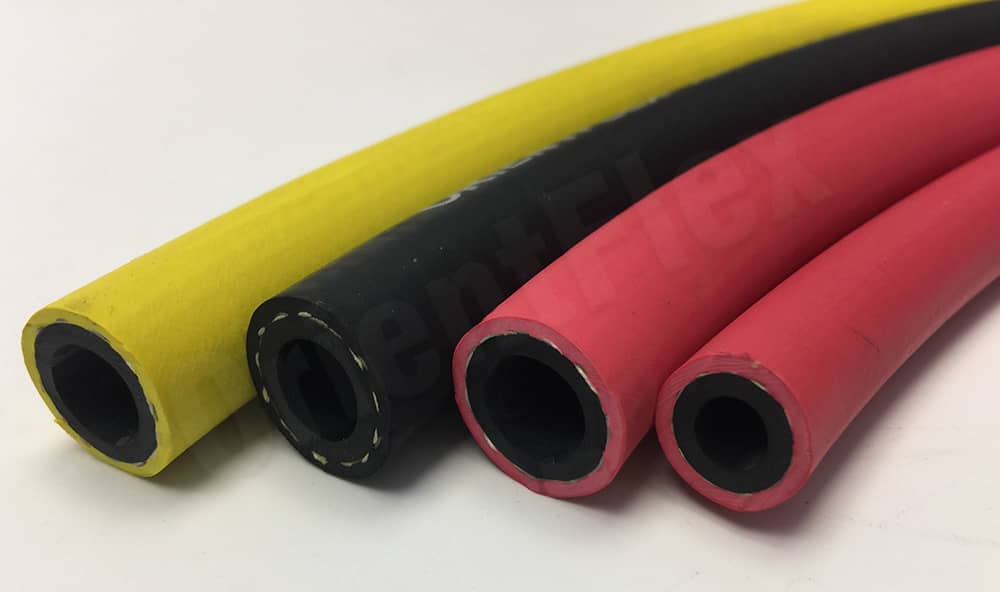
Opt for steel-wire reinforced industrial air hoses. They handle high suction and pressure without collapsing. It is critical for industrial vacuum or air-powered systems.
Corrosion-resistant fittings
Choose brass or stainless steel fittings. Industrial environments have dust, moisture, or chemicals. So these fittings avoid rust and keep air leaks at bay.
Kink resistance
Test the industrial air hose by bending it sharply. A good one won’t kink. Because kinks block air flow, slowing down industrial production lines.