
Because of the special purpose, the choice of fire hose has become a top priority for firefighters, so it is very important to understand the difference between them before purchasing.
Before you choose a fire hose, there are some things to consider:
What job do you need the hose to do?
Does the National Fire Protection Association (NFPA) have codes or standards that determine which hose is used for a specific purpose?
How difficult is the hose to maintain – and how long will it last?
Fire fighter hoses are often used to transport water to prevent the spread of fire and extinguish the flames. Attack fire hoses deliver water to the fire scene through fire pumps.
Water supply fire hoses (usually 4 inches or 6 inches or even larger in diameter) carry large volumes of water from a hydrant or other pressurized water source to the center of the fire pump, where it can eventually be delivered to the attack hose.
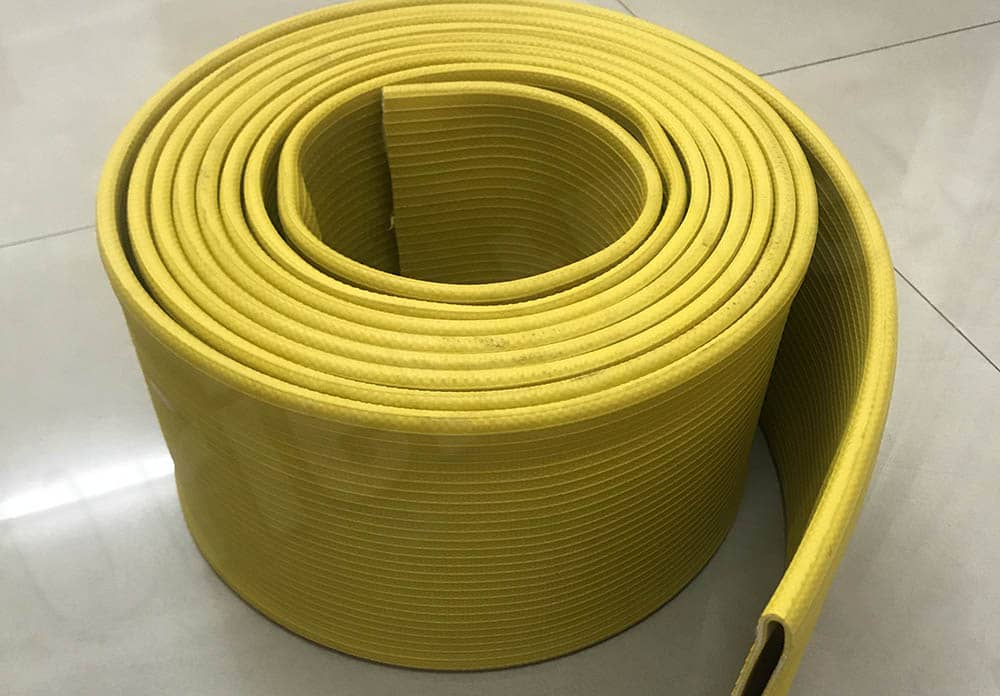
Fire hose materials
The rubber covered fire hoses from QRFS are manufactured from a synthetic nitrile rubber and are resistant to fuels, chemicals, oils, environmental pollutants, mold, mildew, and extreme temperatures.
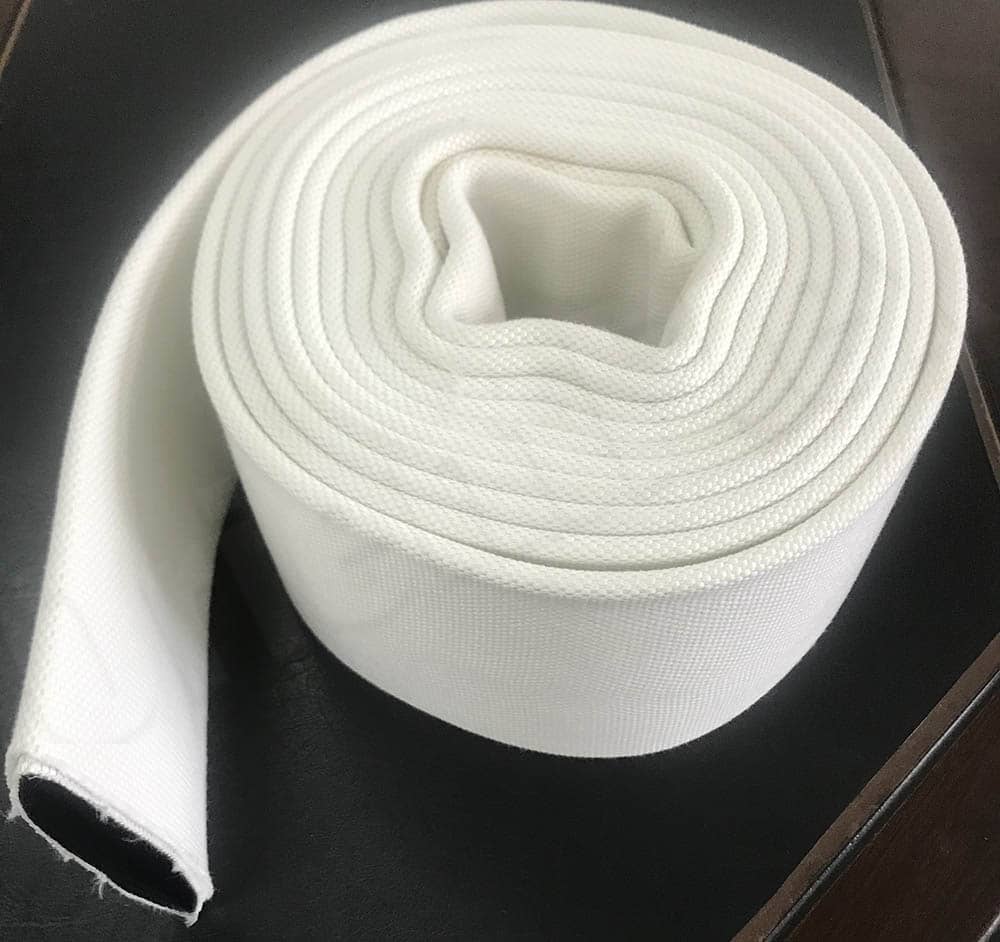
Single jacket fire hoses have a layer of polyester “jacketed” around the interior rubber. The models available from QRFS are made from both staple and filament polyester, woven in both warp and weft direction.
Warp fibers are lengthwise fibers that are stretched under tension, whereas weft fibers are woven crosswise under no tension to add strength and structure to the weave. The polyester itself as well as the weave are resistant to ozone, heat, and weathering.
Our double jacket fire hoses are also made from both staple and filament polyester, woven in both warp and weft direction. These hoses have more resistance to the elements than single jacket hose, as they have that extra layer of polyester jacket.
Supply Line vs. Booster Fire hose Materials
In a fire, hoses are used as either supply lines or booster lines. Supply lines deliver the main water supply, and boosters branch off and deliver a single stream of water handled by one person or a team.
Fire hose supply lines are typically at least 3 inches in inside diameter, and may be as much as 6 inches, while booster lines are usually 1-3/4” or 2-1/2”. The supply lines are often called intake lines, and boosters are referred to as attack lines.
Supply hoses must be constructed of fabric capable of holding enormous pressure, but flexibility is less important because the delivery of the water to the fire is done by the attack hoses. For this reason, supply hoses are always reinforced with multiple layers of fire hose fabric capable of resisting great pressure, and sometimes that material has little flexibility.

Different Fire Hose Fabric for Different Jobs
Non-collapsible (rigid) supply hoses have a rubber lining, layers of fabric and sometimes wire mesh reinforcement and an outer layer of rubber. For added flexibility, some types of hose use plastic mesh material instead of wire.
Additional strength, heat resistance and pressure capacity can be gained by using fire hose material impregnated with polymer reinforcer. Since these additives cause changes in the hose’s flexibility, the types of hose are called “hard” or “soft.”
Each has its good points in the field. Woven fabric, or impregnated, fire hoses are soft and relatively easy to handle, so they lend themselves to repeated use and quick deployment. Hard hoses will not be collapsible. While this is necessary in places where the water supply without pressure.
Fire Hose Material Based on Water Source
When a fire happens in an urban location, municipal water is available at standard pressure. Here, fire hose made of a soft fabric can be used because the water will be at full pressure from the instant it leaves the supply valve.
If a fire happens in a rural location, the most abundant source of water may be a lake or river. Firefighters can put a hose in the lake and pump water out, but if they try it with a collapsible hose, the natural pressure above the hose will make it collapse.
Here you need a non-collapsible fabric fire hose. Because it will keep its shape when lowered into the water.
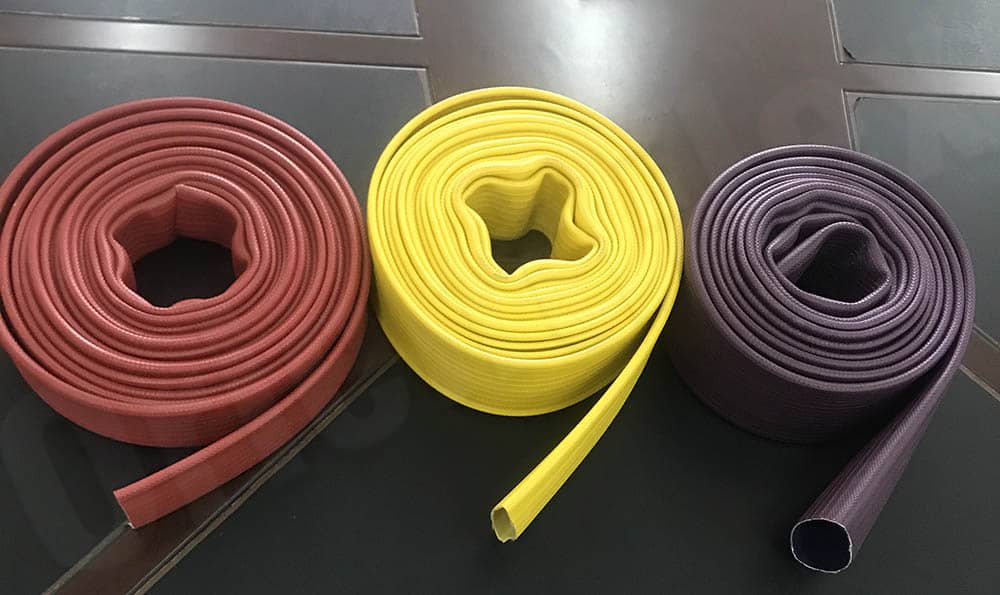
Fire hoses can be classified into the following main types:
According to the material:
Rubber-lined fire hose: It has good flexibility, wear-resistance, and water-tightness. The rubber lining can effectively prevent water leakage and is suitable for various firefighting environments.
PVC-lined fire hose
Made of polyvinyl chloride, it is relatively inexpensive, has good chemical resistance and water-tightness. It is widely used in general firefighting and some industrial and civil water-supply occasions.
Thermoplastic elastomer-lined fire hose
Combines the advantages of thermoplastics and elastomers, with high flexibility, good abrasion resistance and aging resistance, and can be used in harsh firefighting environments.
According to the working pressure:
Low-pressure fire hose
The working pressure is generally below 1.6MPa, which is commonly used in civil fire protection and some small-scale firefighting occasions, such as community fire hydrants.
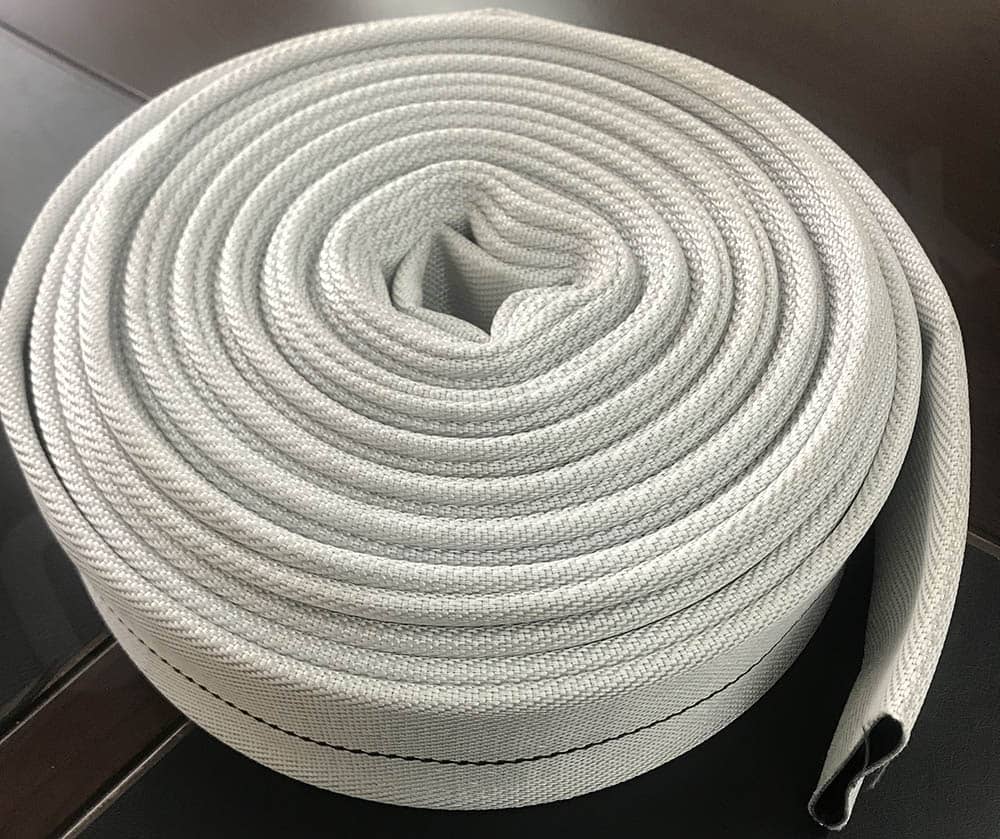
Medium-pressure fire hose
The working pressure is between 1.6MPa and 4.0MPa, which is suitable for some industrial firefighting and large-scale civil fire protection projects that require higher water pressure.
High-pressure fire hose
The working pressure is above 4.0MPa, mainly used in special firefighting occasions, such as high-rise building firefighting, forest fire prevention in mountainous areas, and some industrial sites with high-pressure water-spraying requirements.
According to the structure:
Single-layer fire hose
Consists of a single layer of material, which is relatively simple in structure and light in weight, but has relatively low pressure resistance and is suitable for some low-pressure water-supply occasions.
Double-layer fire hose
Usually has an inner layer for water-tightness and an outer layer for protection, which has better pressure resistance and wear-resistance than single-layer hoses, and is widely used in general firefighting.
Reinforced fire hose
On the basis of the inner and outer layers, reinforcing materials such as wire meshes or fiber filaments are added to improve the pressure-bearing capacity and tensile strength of the hose, which is suitable for high-pressure firefighting and long-distance water-conveying occasions.
These are the common classification methods of fire hoses, and different types of fire hoses have their own characteristics and application scenarios to meet the diverse needs of firefighting work.
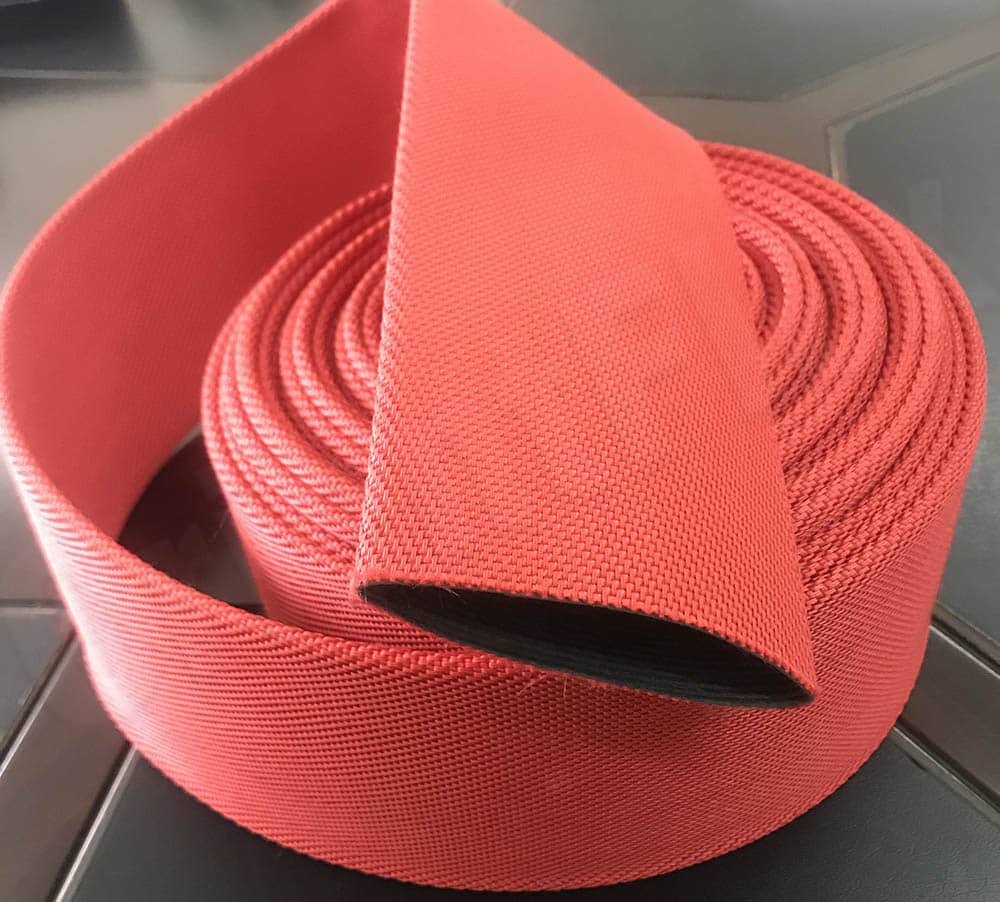
The quality of a fire-hose has a significant impact on firefighting in the following ways:
Water pressure and flow rate
High-quality fire hoses have good pressure-bearing capacity and low internal resistance. They can maintain the water pressure from the fire pump and ensure a sufficient flow rate of water to the fire site. In contrast, low-quality hoses may have poor pressure resistance, resulting in water pressure loss during transportation. Their rough inner walls may also increase fluid resistance, reducing the flow rate of water and weakening the firefighting effect.
Durability and reliability
High-quality fire hoses are made of durable materials and have excellent manufacturing processes, which can withstand the friction, stretching, and bending during firefighting operations without being easily damaged. They are also more resistant to high temperatures, sunlight, and chemical corrosion, ensuring long-term reliable use. Low-quality hoses are prone to cracking, leaking, or bursting during use, which not only affects the normal progress of firefighting but also poses a threat to the safety of firefighters.
Flexibility and operability
Good-quality fire hoses have appropriate flexibility, which makes it easier for firefighters to lay, bend, and move the hoses in complex fire scenes. This flexibility allows them to quickly reach the fire point and adjust the direction of water flow. In contrast, low-quality hoses may be too stiff or too soft, making them difficult to operate. Stiff hoses are hard to bend and lay, while overly soft hoses may kink easily, blocking the water flow and affecting the efficiency of firefighting.
Sealing performance
High-quality fire hoses have excellent sealing performance at the joints, which can prevent water leakage during high-pressure water delivery. This ensures that all the water pressure and flow are used for firefighting. Poor-quality hoses may have problems with joint sealing, resulting in water leakage. Water leakage not only reduces the effective water volume for firefighting but also makes the fire scene more slippery, increasing the risk of accidents for firefighters.
Not sure which fire hose material or fabric is right for your work setting? We can help. Contact us today.